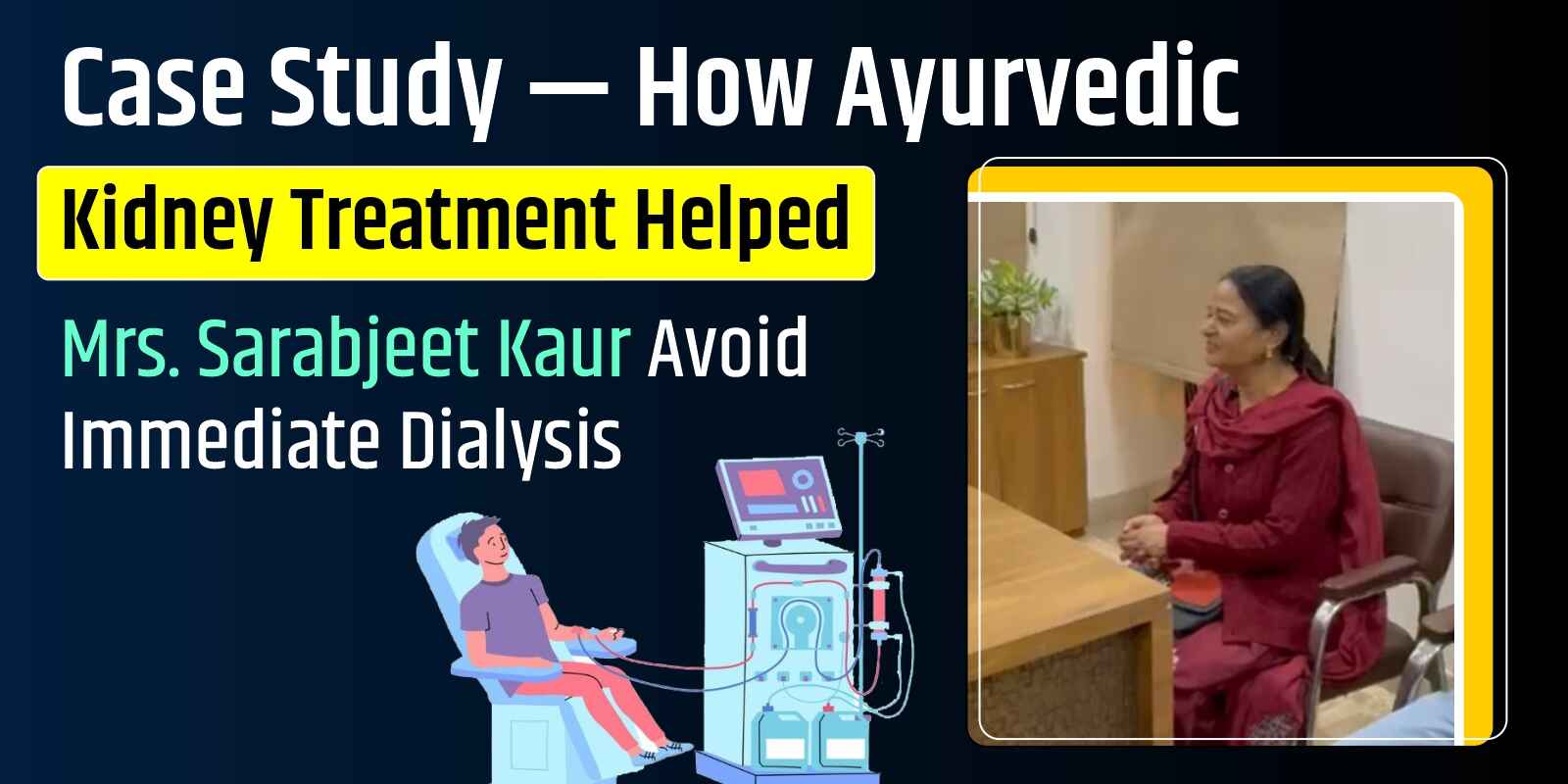
Mrs. Sarabjeet Kaur arrived at Karma Ayurveda with renal concerns and high blood pressure. Her doctors had recommended dialysis after her serum creatinine reached 4 mg/dL. Following an individualized ayurvedic kidney treatment plan at Karma Ayurveda, her creatinine reduced to 3 mg/dL, and other markers—blood urea, BUN and phosphorus—showed improvement. Her blood pressure also returned to a normal range. These measurable changes allowed her care team to defer immediate dialysis and focus on monitored recovery.
Patient: Mrs. Sarabjeet Kaur (consent obtained)
Primary concerns: Elevated creatinine (reported at 4 mg/dL), abnormal kidney markers (blood urea, BUN, phosphorus) and uncontrolled blood pressure. Her medical team had advised dialysis because of these findings.
Impact: Anxiety about dialysis, reduced energy, and a desire to try monitored complementary care that might stabilize kidney function.
Karma Ayurveda provided an individualized, integrative protocol focused on stabilizing renal function and supporting overall health. Core elements included:
Note: This case study describes one patient’s course and outcomes. It does not claim universal results. Always consult qualified practitioners before changing treatment.
Baseline:
After Ayurvedic treatment (reported improvement period):
Key measurable outcome: creatinine fell from 4 → 3 mg/dL, enabling the patient to avoid immediate dialysis recommendation at that time.
“My creatinine had reached 4 and the doctors were advising dialysis. After starting treatment at Karma Ayurveda, my creatinine came down to 3 and my blood pressure is normal now.”
A drop in serum creatinine from 4 → 3 mg/dL is a directionally important improvement in a key filtration marker. While a creatinine of 3 mg/dL is still elevated and requires ongoing monitoring, the magnitude of change indicates better renal clearance than at baseline.
Improvements in blood urea, BUN and phosphorus suggest improved nitrogen and mineral handling, which can reflect dietary adjustments, better hydration, symptom control and the effects of supportive herbal therapy. Normalization of blood pressure reduces cardiovascular strain and further supports kidney recovery.
Important: this is a single-patient outcome. Results differ by disease stage, coexisting conditions and adherence. Always combine complementary care with conventional medical oversight.
This case study documents the experience of one patient. Individual responses to Ayurvedic or any medical treatment vary. The information here is educational and not a substitute for professional medical advice, diagnosis, or emergency care. Always coordinate treatment plans with licensed nephrologists and qualified Ayurvedic practitioners.
Mrs. Sarabjeet Kaur’s case shows measurable improvement in creatinine and other kidney markers with symptom relief and blood pressure normalization following a monitored Ayurvedic plan. If you or a loved one are exploring integrative kidney-support strategies, begin with a medically supervised assessment and a personalized plan that coordinates with your existing care team.
Start a kidney-support consultation with Karma Ayurveda — Schedule an assessment.
Ans. Ayurvedic care can support kidney function and occasionally improve lab markers when used as part of a monitored, individualized program. Responses vary and require medical supervision.
Ans. In this case, dialysis was avoided at the time because of improved labs and blood pressure. Long-term decisions depend on ongoing monitoring and the patient’s clinical course.
Ans. Some Ayurvedic formulations can be used safely alongside conventional medications, but coordination with your nephrologist is essential to avoid interactions and ensure safety.
Ans. Bring recent labs: serum creatinine, eGFR, BUN/blood urea, electrolytes (sodium, potassium), phosphorus, and blood pressure readings.
"Ayurveda is not just a system of medicine; it's a way of life. Connect with us to embrace a lifestyle that nurtures your body, mind, and soul."

Certificate no- AH-2023-0186
JAN 05,2023-JAN 04,2026
Our Clinics in Your State

77, Block C, Tarun Enclave, Pitampura, Delhi, 110034

C-28, Ground Floor, Block C, Sector 12, Noida, Uttar Pradesh 201301

1st Floor, 556, 14th Main Rd, Sector 3, HSR Layout, Bengaluru, Karnataka 560102

Office No. 602 Block - A, 6th Floor, Kumar's Ranjan Enclave, Palika vinayak hospital, New Colony, Mahatma Gandhi Nagar, Lohia Nagar, Patna, Bihar 800020

Office No 405, SO-Lucky Commercial Complex, Junction, Andheri - Kurla Rd, opposite Holy Family Church, Chakala, Andheri East, Mumbai, Maharashtra 400093

House No. 2, Ward - Ravi Ahmad Kidvai Nagar, 258, Vishal Khand, Gomti Nagar, Lucknow, Uttar Pradesh 226010